

Advent calendar box structures rely on rigid or folding-carton designs with individually die-cut compartments, sized to product dimensions. LansBox builds these from paper-based, recyclable stock, supports interior and exterior CMYK printing, and accepts PDF, PSD, and JPEG design files, with prototyping available before mass production confirms structure and print quality.
Key Takeaways
LansBox offers advent calendar boxes with customizable interior and exterior printing across all box styles.
Production timelines range from 10 to 30 business days with flexible minimum order quantities based on customization.
Eco-friendly material options available for sustainable advent calendar packaging that boosts inventory turnover by 15%+.
Design submissions accepted in PSD, PDF, and JPEG formats for seamless creative collaboration and implementation.
Why Does Advent Calendar Box Structure Matter?
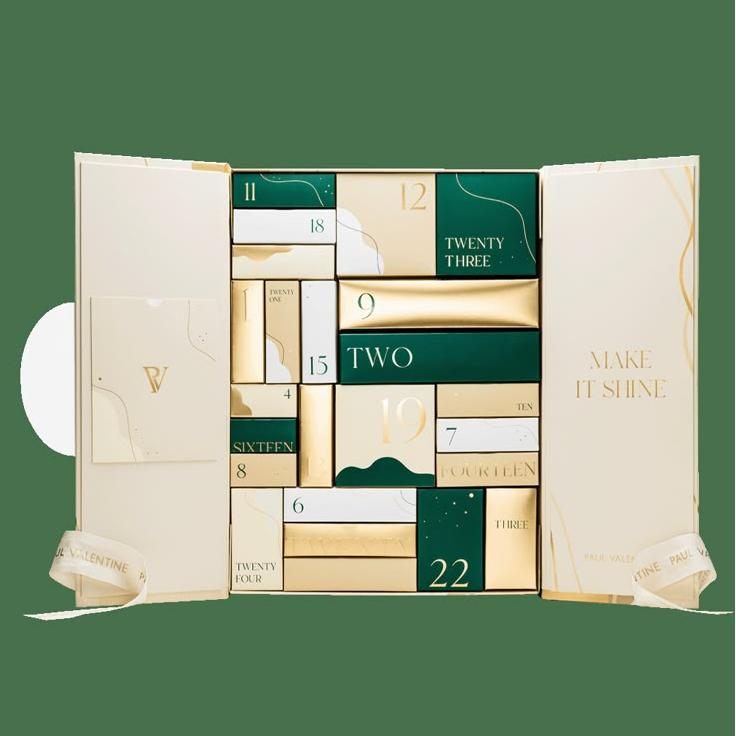
Structure decides whether a countdown box survives 24 openings or falls apart by day five. A weak frame means torn flaps, crushed compartments, and a customer who never makes it to December 24th. Get the engineering right. Every drawer, door, or window becomes a small brand touchpoint that builds anticipation instead of frustration.
Get a Custom Advent Calendar Quote from LansBox
LansBox builds its Advent Calendar Box Structure around four pillars: high-quality board, creative design and printing, eco-friendly materials, and flexible order sizes. Each element matters on its own, but together they determine how the box performs under repeated handling and how it photographs for unboxing content.
Durable board stock that holds compartment walls firm through daily opening and closing
Custom print and finishing that reinforce brand identity at every reveal
Eco-friendly materials for brands prioritizing recyclable, paper-based packaging
Flexible order volumes that scale from a limited seasonal drop to a full retail rollout
Does Order Size Limit Structural Customization?
Not necessarily. Minimum order quantities shift based on product type and how customized the structure gets. A small brand testing a new drawer configuration doesn’t need factory-scale volume to start. This flexibility lets procurement teams pilot a design before committing to mass production.
A well-engineered advent calendar structure does more than hold product. It drives brand awareness, deepens customer loyalty, and lifts seasonal and promotional sales—turning a single vacation purchase into a 24-day relationship with the brand. For product developers, that means structure isn’t a back-end detail. It’s the mechanism that keeps customers opening, sharing, and coming back next season.
Which Materials Work Best For Advent Boxes?
Recycled and virgin paperboard win the material contest for advent packaging. Paper stock does two jobs at once: it holds the box shape and carries the print. Weight matters more than most procurement teams expect. Heavier board resists sagging once 12 or 24 compartments get loaded with product. Lighter stock keeps shipping costs manageable for high-volume seasonal runs.
The advent calendar box structure dictates which board weight makes sense. Drawer builds, magnetic-closure boxes, book-style formats, folding boxes, and rigid gift boxes each place different stress on the paperboard. A drawer format needs stiffer walls to survive repeated sliding. A folding box can run lighter since it collapses apartment for storage rather than staying rigid on a shelf.
What material choices affect compartment durability?
Compartment layout and paper thickness work together, not separately. Thin board flexes under repeated opening. Closing, especially in drawer-style calendars where daily use over 24 days adds real wear. Pairing sturdier stock with inserts — paper pulp trays, EVA foam, or cardboard dividers. Keeps each slot from crushing whatever sits inside it.
Sustainability now sits at the top of most sourcing checklists, and paper-based structures deliver on that front without compromise:
Full recyclability: paper-based packaging solutions can achieve 100% recyclability, satisfying vacation shoppers who scrutinize waste.
Eco-friendly board options: sustainable material choices extend across both the outer structure and interior inserts.
Print-ready surfaces: paperboard takes CMYK printing cleanly, supporting branded reveals at every compartment.
Rigid over flimsy, recyclable over disposable-in-name-only — that’s the calculus procurement teams should run before locking in a supplier.
What Insert Options Keep Products Secure?
Four materials do the heavy lifting: EVA foam, paper pulp, cardboard, and plastic trays. Each holds a single day’s product in its own compartment, so nothing shifts, cracks, or rattles loose in transit. That distinction matters more than most procurement teams realize until a shipment arrives damaged.
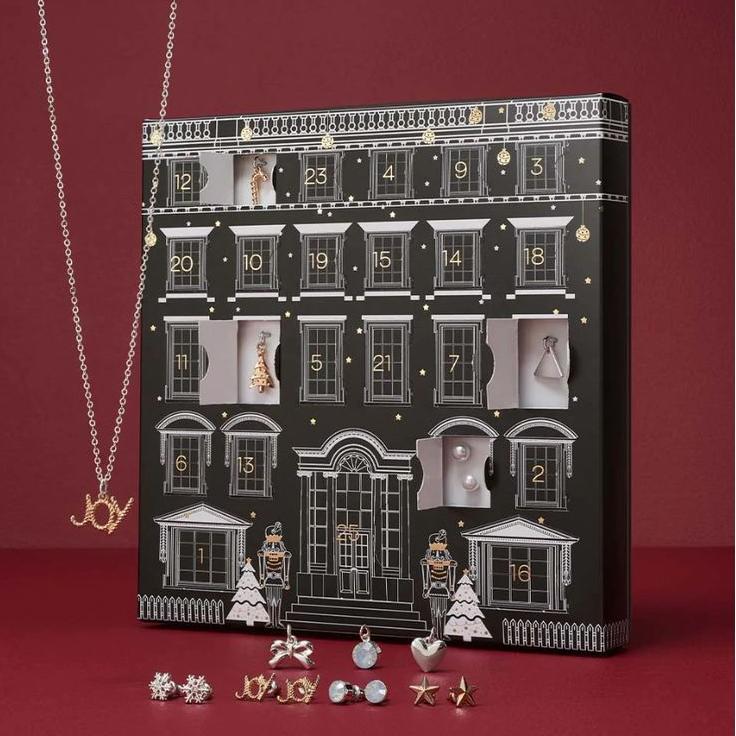
Insert design isn’t one-size-fits-all. Products dictate structure. Beauty and cosmetics items often need molded foam cavities. Chocolates and candies call for paper pulp trays shaped around each piece. Candles need reinforced cardboard slots to handle weight. Jewelry and toys benefit from rigid plastic trays that keep small parts from migrating between compartments.
Get a Custom Advent Calendar Quote from LansBox
How does the advent calendar box structure affect insert fit?
Compartment layout and paper material choice determine whether an insert actually fits the box shell. A structure with mismatched dimensions leaves products loose, defeating the entire purpose of a secure insert.
Can insert accuracy be verified before mass production?
Yes. Designers submit PSD, PDF, or JPEG files to check die-lines and compartment placement before a single unit rolls off the line. This step catches spacing errors while they’re still cheap to fix.
Getting the insert right on paper is only half the job. Production-stage quality inspections catch fit problems — loose cavities, misaligned slots, warped trays. Before boxes ship to fulfillment centers or retail shelves. Skipping that check trades a small delay now for costly returns later.
For procurement teams comparing options, the material choice roughly breaks down like this:
EVA foam — cushions fragile or irregularly shaped items
Paper pulp — sustainable, molds tightly around small products
Cardboard — cost-efficient, works for uniform, lightweight items
Plastic trays — rigid support for jewelry, toys, and heavier goods
The right combination depends on the product line, not a generic template.
How Do Printing And Finishing Options Differ?
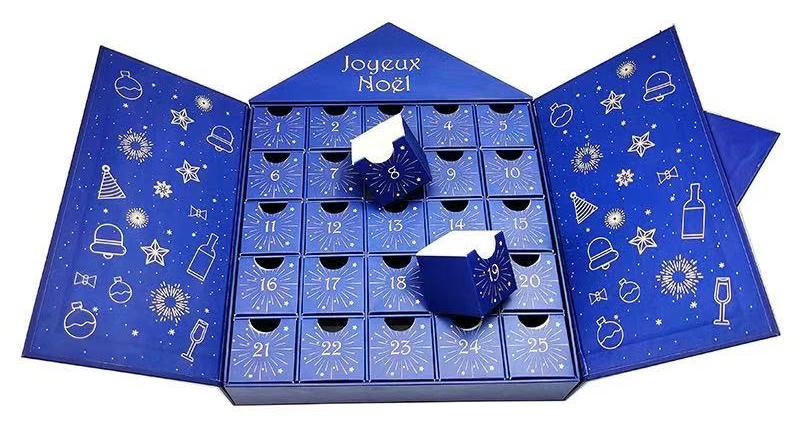
Printing differs by surface, finishing differs by technique — and the advent calendar box structure is built to carry both. Exterior graphics sell the box on a shelf or in a photo. Interior graphics do the emotional work, delivering a reveal message the moment a door opens. LansBox prints both sides across every custom box style, so a brand’s countdown story doesn’t stop at the front panel.
Finishing is where value gets added, not just printed. A apartment CMYK design turns into a premium object through foil stamping, embossing, debossing, spot UV, and soft-touch lamination. Each door reveal becomes a small moment of theater rather than a simple flap.
Which finishing technique fits which reveal moment?
Foil stamping catches light on logos and dates, making each door feel like a small gift in itself. Embossing and debossing add texture without ink, useful for brands leaning into minimalist, tactile design. Spot UV highlights a single icon or number against a matte background, drawing the eye to exactly one detail per door.
What file formats does production accept?
Design teams submit files as PSD, PDF, or JPEG. Production uses those files to calibrate CMYK runs for both interior and exterior graphics before a single door gets cut. Getting the file format right early avoids costly reprints once the structural die line is locked.
Get a Custom Advent Calendar Quote from LansBox
Advent Calendar Box Structure | FAQ
What structure do advent calendar boxes use?
Advent calendar boxes use rigid or folding-carton designs with individually die-cut compartments sized to product dimensions. LansBox builds these from paper-based, recyclable stock for durability across repeated openings.
What printing and design file options does LansBox support?
LansBox supports interior and exterior CMYK printing on all box styles, plus prototyping before mass production. Design teams submit files in PDF, PSD, or JPEG formats for collaboration.
How does order size affect customization?
Minimum order quantities vary by product type and customization level, letting brands pilot new structures without factory-scale volume. Production takes 10 to 30 business days depending on the order.
 EN
EN DE
DE FR
FR PL
PL PT
PT ES
ES JA
JA RU
RU AR
AR IT
IT NL
NL TR
TR KO
KO