

Most retail cereal boxes are not corrugated — they’re made from paperboard (folding-carton stock) because it prints beautifully, stays light and stiff on shelves, and can meet food-safety standards. This article breaks down what paperboard is, why brands typically choose it over corrugated board for single‑serve retail cartons, and when corrugated still wins for shipping and bulk handling. You’ll get a clear comparison of common paperboard grades, learn how coatings and windows affect recyclability and food-grade compliance, and find a straightforward checklist to help you pick the right material for your brand, logistics, and sustainability goals. We also note how LansBox supports cereal packaging from design through delivery, so you can move from idea to shelf with fewer vendors to manage.
What material are cereal boxes typically made of?
Retail cereal cartons are usually built from paperboard — also called folding carton paper or chipboard — because it balances print quality, shelf stiffness, and cost. Paperboard’s smooth face accepts CMYK printing and varnishes that help products stand out. Its foldable construction supports efficient gluing and tuck closures, which keeps unit costs down. When left free of problematic coatings or plastic windows, paperboard is also compatible with food-grade processes and common recycling streams. Knowing the differences between paperboard types helps you match material performance to brand priorities.
 Get a Custom Cereal Box Quote from LansBox
Paperboard varies by surface finish, basis weight (gsm), and coatings. The table below summarizes the common options so you can compare printability, cost, recyclability, and food-safety suitability at a glance.
| Paperboard Type | Printability | Cost | Recyclability / Food-safety suitability |
|---|---|---|---|
| SBS (Solid Bleached Sulfate) | Bright, very smooth face ideal for accurate CMYK and detailed art | Higher cost | Highly recyclable; well suited for direct food contact when uncoated |
| CCNB (Clay Coated News Back) | Good print surface on the coated face; economical for many SKUs | Moderate cost | Usually recyclable; coated face can affect some recycling lines |
| Kraft board | Moderate print quality with a natural brown aesthetic | Lower to moderate cost | Good recyclability; often used where an eco look is desired; suitable for indirect contact |
| Chipboard / recycled board | Lower print fidelity | Low cost | Recyclable but contains recycled fibers; food‑contact suitability depends on requirements |
In short: SBS gives premium print performance, CCNB and Kraft trade appearance or cost for value, and recycled chipboard cuts cost at the expense of image. Next, we explain why those trade-offs matter for shelf-ready cereal packaging.
Paperboard as the standard for retail cereal boxes
Paperboard is a multi-ply, pulp-based sheet formed and finished into folding cartons that are die-cut, creased, and glued. Its smooth outer face supports high-quality CMYK printing and varnishes, while the inner plies provide the stiffness needed for upright display. Typical finishes include matte, gloss, or soft‑touch; brands also choose basis weights to dial in stiffness and perceived quality. Because paperboard can be supplied in food-contact grades and accept certain barrier coatings, it’s the default choice for shelf-ready cereal cartons that need both visual impact and regulatory compliance.
Paperboard also ships flat, which saves space and simplifies assembly at packing lines or retail locations. The next section lists common paperboard variants and how each aligns with print, cost, and sustainability priorities.
Common types of paperboard used in cereals
SBS, CCNB, Kraft, and recycled chipboard are the typical paperboard options for cereal packaging, each with distinct advantages. SBS (Solid Bleached Sulfate) offers the whitest, smoothest face for premium imagery and precise color—at a higher price. CCNB pairs a coated front for printing with a newsback or recycled backsheet to reduce cost. Kraft board gives a natural brown look that reads as sustainable and affordable while keeping adequate strength for many cartons.
Choosing among SBS, CCNB, and Kraft is a trade-off between print fidelity, unit cost, and perceived sustainability — and whether you need barrier coatings or windows for the product itself.
How do paperboard and corrugated cardboard differ for cereal packaging?
Paperboard and corrugated cardboard play different roles in the supply chain. Paperboard (folding carton) is built for shelf presentation and high‑quality printing. Corrugated cardboard (fluted board) is engineered for stacking strength and transit protection. Structurally, paperboard is a single-sheet folding carton with a smooth printable surface; corrugated combines a fluted medium between liners to resist crushing during shipping. Cost-wise, paperboard is efficient for individual retail boxes while corrugated is the right choice for multipacks, trays, and outer cases.
The table below highlights common uses and trade-offs so you can choose the right material where it matters.
| Material | Characteristic | Use-case / Value |
|---|---|---|
| Paperboard (folding carton) | Smooth printable face, foldable, lightweight | Single retail boxes, high-impact shelf graphics, consumer-facing branding |
| Corrugated cardboard | Fluted core with liners, high stacking and crush resistance | Outer shipping boxes, multipack cases, e-commerce protection |
| Paperboard + inner liner | Food-contact combination | Retail cartons with internal barrier for freshness or oil resistance |
Because of these differences, brands commonly use paperboard for the consumer-facing carton and corrugated for transit protection. Below we outline the paperboard properties that make it a strong shelf-ready choice.
Key properties of paperboard for shelf-ready cereal boxes
Paperboard’s strengths for cereal cartons are surface printability, calibrated stiffness to stand upright on shelves, and efficient fold‑and‑glue construction for automated lines. Good printability enables vivid graphics and brand recognition; basis weight and stiffness determine how well a box resists compression and holds shape when stacked. These measurable properties inform panel sizing, tuck closures, and decisions about internal inserts for product stability.
Understanding these attributes lets you optimize shelf presence and the unboxing experience before you add any transit protection strategies.
When is corrugated cardboard appropriate for cereals?
Corrugated is the right choice when protection, stacking strength, and transit resilience outweigh high-fidelity shelf graphics. Typical scenarios include distribution cases holding multiple retail cartons, e-commerce shipments that face impacts, and bulk wholesale packaging. Flute profiles (B, C, E, etc.) change cushioning and compression resistance — larger flutes absorb shock better, smaller flutes print and label more cleanly.
Brands sometimes combine corrugated inner partitions or outer sleeves with printed paperboard to keep brand visibility while protecting products in transit. But corrugated is rarely used as the consumer-facing single retail carton because its textured surface limits high-resolution printing.
Are cereal boxes recyclable and food-safe?
Yes — most plain paperboard cereal boxes are recyclable and can meet food‑safety standards, but outcomes depend on coatings, liners, and any plastic windows or adhesives used. Uncoated or clay-coated paperboard without plastic windows typically goes into curbside paper recycling. Wax coatings, plastic laminates, or heavy contamination (oils, food residue) can block recycling or require component removal. For food safety, brands specify food‑contact grades and approved barrier coatings to prevent migration and preserve freshness — decisions that also affect recyclability and compliance.
Packaging plays a direct role in product integrity and public health. Research highlights how appropriate packaging reduces spoilage risks and preserves quality across the supply chain.
Cereal Packaging: Materials, Shelf Life, and Food Safety
Microbial spoilage (yeasts, molds, bacteria), fat oxidation, and protein degradation can cause significant economic losses and pose risks to public health. Beyond a product’s inherent properties, shelf life and safety also depend on packaging materials and technologies. Effective, economically viable, and consumer-friendly packaging can reduce food waste, protect quality, and limit losses across the supply chain — from manufacturer to consumer. This chapter examined common packaging materials and their role in delaying contamination, reducing lipid oxidation, and improving the safety and quality of cereal and cereal-based products.
Packaging of Cereal Products, M Hoque, 2023
| Material Type | Food-grade? | Recyclable? | Notes |
|---|---|---|---|
| Uncoated SBS | Yes (food-contact grades available) | Yes | Top print quality; recyclable when dry and clean |
| CCNB with coated face | Yes (with approved coatings) | Usually | Coated face can affect some recycling streams |
| Kraft board (uncoated) | Yes for indirect contact | Yes | Natural look, widely recycled |
| Waxed or plastic-lined board | Depends on coating | No / Limited | Linings often prevent standard recycling |
| Plastic window added | Depends on window adhesion | Remove window before recycling | Windows should be separated where pure paper streams are required |
This table helps packaging teams balance food-safety needs and recycling goals when they specify board types and coatings. Next we offer hands-on recycling steps and then explain coatings that affect both safety and end‑of‑life handling.
Recycling guidelines for paperboard cereal boxes
Follow this short checklist to keep paperboard in the recycling stream. These practical steps reduce contamination and improve recovery rates.
- Empty the box and remove loose contents: Shake or pour out cereal to avoid food residue in the paper stream.
- Remove inner plastic or foil liners: Separate and recycle or dispose of liners per local rules.
- Take out plastic windows: If present, peel out the window and recycle the paperboard separately where required.
- Keep boxes dry and flatten: Dry, flattened boxes are easier and cheaper to process.
- Check local recycling rules: Some municipalities accept coated paperboard; others require removal of coatings.
- Avoid greasy or heavily soiled boxes: Contaminated boxes can ruin recycling batches and are often diverted to landfill.
These steps increase the chance that paperboard is properly recycled and prevent contamination that harms pulping operations. The section below outlines coatings and liners and their recycling and food‑safety implications.
Food-grade considerations and coatings
Food-grade packaging requires materials and coatings that stop migration and protect product quality. Common options include water‑based varnishes, clay coatings, and specialized barrier lacquers — each with different effects on recyclability. Generally, water‑based coatings have less impact on recycling, while plastic laminates and waxes can make a board hard to process in standard streams.
Brands must balance migration resistance (to meet food-safety and shelf-life targets) with sustainability goals. Recyclable barrier coatings and mono‑material designs can preserve both protection and end‑of‑life recovery. Many brands also ask suppliers for performance testing and compliance documentation before scaling production.
Fiber-based packaging offers sustainability and stiffness advantages, but its barrier limitations drive ongoing innovation for food and pharmaceutical uses.
Fiber-Based Packaging: Advantages, Barrier Challenges, and Food Applications
Fiber-based packaging delivers sustainability, recyclability, and a favorable stiffness-to-weight ratio compared with many plastics. Still, limited barrier performance and sensitivity to moisture are challenges for broader use. Research into biodegradable, biocompatible biopolymers and improved biofilm coatings aims to close that gap for food and pharmaceutical packaging applications.
… Printed Moisture Sensor On Barrier Coated SBS Board: The Characterizations of the Hemicellulose-Based Biofilms and Their Applications for Smart Packaging, 2018
How LansBox helps: If you need a supplier that sources food‑grade board, offers recyclable coating options, and handles design‑to‑distribution logistics, LansBox provides end‑to‑end cereal box solutions. We list “Cereal Box” under our Food menu and offer eco‑friendly substrates, high‑quality printing, instant quotes, quick turnarounds, and flexible order sizes so you can align material choices with safety and recycling goals. Contact LansBox to discuss samples, testing, or a quote.
LansBox cereal box packaging solutions: design, printing, and materials
LansBox is a custom box manufacturer that combines structural design, high‑quality printing, and logistics services to simplify cereal packaging production and distribution. We offer fully customized folding cartons, a range of finishing options, and eco‑friendly material choices. Our integrated model — design, inspection, assembly, packaging, warehousing, and shipping — reduces vendor complexity so brands can scale faster and with fewer handoffs.
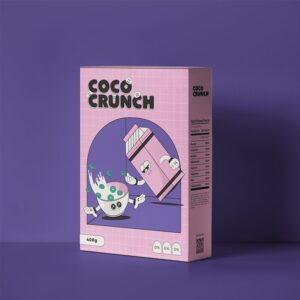
Get a Custom Cereal Box Quote from LansBox
Customization options for cereal boxes
We support a broad set of customization features to meet both branding and functional needs: dieline-driven structural design, CMYK and spot-color printing, finishes like gloss, matte, or soft‑touch, and structural choices such as tuck‑top closures, windows, and inserts. Those options let brands balance visual impact with protection — for example, inner liners for freshness or molded inserts for fragile pieces. We also provide production guidance on MOQs and eco‑friendly alternatives.
- Printing: CMYK, spot colors, varnish, and finishing to boost shelf impact.
- Finishes: Matte, gloss, soft‑touch, and selective varnish to refine look and feel.
- Structural: Dielines for tuck‑top, snap‑lock, windows, and internal inserts for protection and presentation.
Why choose LansBox for cereal packaging?
LansBox brings several advantages for cereal brands: fully custom packaging matched to each SKU and brand; instant quoting to speed decisions; fast turnarounds for seasonal or promotional launches; consistent, high‑quality printing; and eco‑friendly material choices that help meet sustainability targets. Our end‑to‑end services — from design through shipping — reduce coordination overhead and help lower time and cost to market.
Working with a single partner like LansBox is helpful when you need testing, food‑grade validation, and scalable production while keeping print quality and recyclability on target. For D2C and e‑commerce brands, our flexible order sizes and warehouse‑to‑shipment services align packaging supply with fulfillment needs.
How to choose the right cereal box material for your brand?
Picking the right cereal box material means weighing brand image, shelf presentation, distribution channels, food‑safety needs, and sustainability targets. If shelf impact is your priority, favor higher‑grade paperboard; if distribution and transit damage are primary concerns, plan for corrugated outer cases or reinforced inners. Cost and order volume will determine whether premium board like SBS is feasible or if CCNB or Kraft hit the right margins with acceptable appearance. Use the criteria and checklist below to make a confident, rapid decision.
Material selection criteria
Work through this ranked checklist to evaluate material options. Define acceptable thresholds for each item against the SKU you’re packaging.
- Print quality / brand presentation: Choose SBS or a high‑grade coated paperboard when premium graphics matter.
- Structural strength / on‑shelf stability: Pick a basis weight (gsm) that supports upright display and resists collapse.
- Transit protection / distribution channel: Use corrugated outer cases and consider inner partitions for e‑commerce.
- Recyclability / sustainability: Favor mono‑material designs and recyclable coatings to hit sustainability goals.
- Food‑safety / barrier needs: Specify food‑grade board and approved barrier coatings when freshness or migration risk is a concern.
- Cost and order size: Balance unit cost against MOQs and expected sales velocity.
Applying these criteria helps you pick a material that fits the product’s retail lifecycle and logistical realities. Below is a quick‑start checklist to move from evaluation to supplier engagement.
Quick-start decision checklist for cereal box materials
Use these practical steps to select, sample, and validate materials before full production. Each step focuses on quality, safety, and recyclability.
- Define priorities: Confirm whether print fidelity, sustainability, or cost is the top priority for this SKU.
- Select candidate materials: Narrow to 2–3 options (for example, SBS, CCNB, Kraft) based on your priorities.
- Specify finishes and coatings: Decide on finishes and whether barrier coatings or windows are necessary; note recycling implications.
- Order samples and prototypes: Request dieline mockups and printed samples to inspect appearance and handling.
- Validate food‑safety: Verify food‑grade certifications or supplier testing for migration and barrier performance.
- Test in distribution: Run stacking, shipping, and e‑commerce transit simulations to confirm structural performance.
- Check recycling outcomes: Consult local recycling facilities or third‑party tests to confirm end‑of‑life handling.
- Engage a manufacturer: Choose a supplier who can deliver your required order sizes, print quality, and logistical support.
This checklist moves your project from specification to validation with clear quality and environmental checkpoints. LansBox can support implementation — from samples and testing to design and shipment — with instant quotes and flexible order sizes to match your timeline and budget.
Are Cereal Boxes Corrugated Cardboard | FAQs
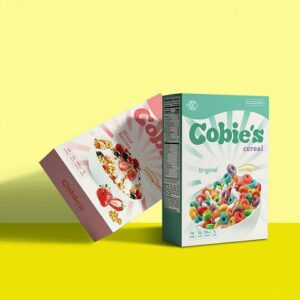
Get a Custom Cereal Box Quote from LansBox
What are the environmental impacts of using paperboard for cereal boxes?
Paperboard is generally made from renewable fibers and is widely recyclable, which helps lower landfill waste and carbon intensity compared with many single‑use plastics. That said, environmental outcomes depend on coatings, laminates, and sourcing practices. Uncoated paperboard is easier to recycle; eco‑friendly coatings and responsibly sourced fibers further reduce impact. Brands increasingly choose sustainable substrates and recyclable coatings to meet consumer and regulatory expectations.
How can consumers ensure proper recycling of cereal boxes?
Consumers can boost recyclability by emptying boxes, removing inner liners or plastic windows, and flattening cartons. Keep boxes dry and follow local recycling guidelines, since some municipalities have specific rules about coated or waxed paperboard. These simple steps help maintain material quality for the recycling stream.
What role do coatings play in cereal box packaging?
Coatings improve print finish, add moisture resistance, and can act as barriers to preserve freshness. Common choices include water‑based varnishes and barrier lacquers. While some coatings are compatible with recycling, plastic laminates and waxes often complicate recovery. Choose coatings that balance protection, food safety, and end‑of‑life performance.
Are there any health concerns related to cereal box materials?
Health concerns mostly center on food safety and chemical migration. Using certified food‑contact board and approved barrier coatings mitigates migration risk. Brands should follow regulations and perform supplier testing to ensure packaging materials do not compromise product safety. Look for supplier documentation or certifications for reassurance.
What innovations are being made in cereal box packaging?
Packaging innovation focuses on sustainability, improved barrier solutions, and enhanced consumer engagement. Expect more recyclable barrier coatings, mono‑material constructions, and compostable alternatives. Brands are also adding QR codes or AR experiences to deepen consumer interaction and provide traceability or recycling instructions.
How does the choice of paperboard affect branding and marketing?
Paperboard choice directly affects print quality, shelf presence, and consumer perception. Higher‑grade board like SBS enables more accurate colors and finer detail, which supports premium positioning. Texture and finish — matte, gloss, soft‑touch — also convey brand values, whether premium, natural, or budget. Align material choices with your marketing goals to ensure packaging reinforces the brand message.
Conclusion
Choosing between paperboard and corrugated cardboard comes down to where the packaging needs to perform: paperboard for shelf appeal and printing, corrugated for transit protection and stacking. By weighing print quality, distribution needs, food‑safety requirements, and recyclability, brands can select the material mix that meets commercial and sustainability goals. If you want hands‑on support — from material selection to production and warehousing — get in touch with LansBox to see how we can simplify the path from design to shelf.
 EN
EN DE
DE FR
FR PL
PL PT
PT ES
ES JA
JA RU
RU AR
AR IT
IT NL
NL TR
TR KO
KO