

Corrugated pizza boxes blend basic structural engineering with practical packaging needs: they protect food, hold in heat, and give brands a printable surface for memorable delivery moments. This guide walks through why corrugated dominates pizza packaging, how flute choices change insulation and printability, the operational benefits for delivery and storage, and how custom printing boosts brand presence without ignoring sustainability. You’ll find clear comparisons between E‑flute and B‑flute, guidance on coatings that balance grease resistance with recyclability, and wholesale strategies for SMBs ordering custom printed pizza boxes. The article also includes checklists and supplier workflow tips to help you plan prototypes, proofs, and production—while keeping discoverability keywords like corrugated box, pizza box insulation, and wholesale corrugated pizza boxes in mind.
Why Are Pizza Boxes Made from Corrugated Cardboard?
Corrugated cardboard is ideal for pizza boxes because its layered construction—linerboards plus a fluted medium—creates a lightweight panel with high stiffness, thermal separation, and impact resistance. Air trapped in the flutes slows heat loss and cushions the pizza during stacking and transit, which helps prevent sogginess and physical damage. Corrugated board is cost‑effective at scale, easy to die‑cut and fold into stackable lids and bases, and accepts multiple printing methods so brands can keep their look consistent. Knowing these functional strengths helps suppliers and brand owners match flute type and board grade to delivery distance and box size.
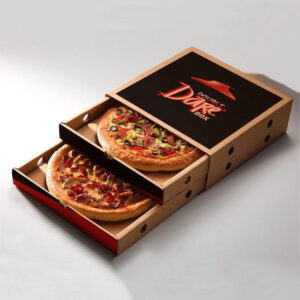
Get a Custom Corrugated Box Quote from LansBox
What Is Corrugated Cardboard and How Does It Benefit Pizza Packaging?
At its core, corrugated cardboard is two flat linerboards sandwiching a fluted medium. That structure gives you rigidity without heavy weight. The flute creates air pockets that reduce heat transfer, improving insulation through a typical delivery window. Corrugated panels also resist crushing under stacked loads and reduce punctures from toppings or rough handling, protecting product quality. Those combined attributes—thermal performance, protection, and a printable surface—are why corrugated is the common choice for delivery, storage, and branded packaging. The table below maps key components to the practical value they deliver.
| Component | Characteristic | Practical Value |
|---|---|---|
| Linerboard | Smooth, printable face | Consistent branding and clear graphics |
| Fluted medium (E‑flute / B‑flute) | Air‑pocket thickness | Insulation and cushioning during transit |
| Board grade (single / double wall) | Strength and crush resistance | Stackability and protection for multi‑pizza loads |
| Grease barrier / coating | Surface treatment | Food safety and moisture resistance |
Choosing the right liner, flute, and coating aligns packaging performance with your brand and delivery needs—reducing damage and keeping pizzas hotter on arrival.
How Do Different Flute Types Like E‑Flute and B‑Flute Affect Pizza Box Performance?
E‑flute and B‑flute differ in flute height and pitch, and those differences change both thermal and printing behavior. E‑flute is thinner with more crests per inch, so it gives a smoother face for sharper printing—good for smaller pizzas or short delivery windows where presentation matters. B‑flute is thicker, offering better cushioning and a bit more insulation—helpful for larger pizzas, longer routes, or heavier stacking. The trade‑offs are cost and print fidelity: B‑flute can be slightly more expensive and won’t reproduce fine detail as well as E‑flute. Pick based on whether insulation or visual detail is the priority for your operation.
Beyond E‑ and B‑flutes, specialty profiles like F‑flute can offer a middle ground of print quality and structure depending on your goals.
F‑Flute Corrugated: Print Quality Meets Structural Strength
In packaging markets that need crisp graphics and a premium look, F‑flute is gaining traction. It combines corrugated strength with the print quality and design flexibility of folding cartons, delivering stacking strength, low weight and good stiffness. For brands seeking an upgraded visual finish without sacrificing function, F‑flute is worth considering.
A Study of F‑flute’s feasibility as a substitute for folding carton, 1995
What Are the Key Benefits of Using Corrugated Pizza Boxes?
Corrugated pizza boxes deliver operational and marketing wins: they retain heat, protect pizzas from damage, stack efficiently for storage and logistics, and serve as a low‑cost marketing surface. Those benefits translate to fewer cold deliveries, lower damage rates, and a stronger perceived value when customers receive a neat, branded box. Because corrugated works with several print methods and coatings, brands can optimize cost, visual impact, and food‑safety requirements. The sections that follow break down insulation mechanics and durability metrics, and offer practical steps you can use when specifying boxes.
How Does Corrugated Cardboard Provide Insulation and Heat Retention for Pizzas?

Get a Custom Corrugated Box Quote from LansBox
Corrugated insulates by trapping air in the flutes and by using fibers with low thermal conductivity. Design choices—lid height, chosen flute, and any ventilation slits—control how much steam stays in the box versus how much escapes, which affects crust texture and sogginess. In typical 20–40 minute delivery windows, a well‑specified corrugated box can keep pizzas at a desirable eating temperature when paired with the right flute and minimal venting. Coatings and additives also change moisture handling: grease‑resistant treatments cut wet‑through risk and, when chosen carefully, won’t block recyclability.
In What Ways Do Corrugated Boxes Offer Durability and Protection During Delivery?
Corrugated resists crushing and impact through the combined strength of linerboards and the fluted medium—improving edge crush and burst resistance and limiting deformation under stack loads. Standard metrics like Edge Crush Test (ECT) and Box Compression Test (BCT) predict how a box performs in real delivery conditions, so ask suppliers for those values when you specify multi‑pizza stacks or heavy toppings. Design tweaks—locking tabs, reinforced corners, or a double‑wall board—add protection against punctures and tilt. For operations planning, request ECT/BCT numbers and run small prototyping tests to validate performance under your actual handling conditions.
- Improved heat retention: Fewer cold deliveries and stronger customer satisfaction.
- Better protection: Lower damage and fewer remakes.
- Cost efficiency: Bulk buying lowers per‑unit costs while keeping performance.
Those tangible benefits explain why corrugated pizza boxes are the delivery standard—and why smart design and specification matter.
How Does Custom Printed Pizza Box Packaging Enhance Brand Visibility?
Custom printed pizza boxes turn a simple container into a memorable brand touchpoint delivered right to customers’ doors. Strong printing improves perceived value, aids brand recall, and encourages social sharing when the design invites photos or interaction. For e‑commerce and D2C brands, consistent packaging across channels strengthens recognition and supports conversion; clear logo placement and short handling instructions also cut confusion and returns. Below we outline common printing processes and practical design tips SMBs can adopt to get the most from their boxes.
What Printing Techniques Are Used for Custom Corrugated Pizza Boxes?
The main printing options for corrugated are flexographic, digital, and litho‑laminate—each with trade‑offs in cost, fidelity, and MOQ. Flexo is cost‑effective for large runs with solid colors and quick turnaround—good for steady SKUs. Digital printing needs no plates, supports short runs and variable data, and is great for seasonal or test campaigns. Litho‑laminate gives the highest visual fidelity for premium packaging but has higher setup costs. Choose based on order size, color needs, and budget.
- Flexographic — best for high‑volume, cost‑sensitive runs.
- Digital — ideal for low‑MOQ, high‑variation campaigns.
- Litho‑laminate — suited to premium, photographic branding.
These methods let brands balance visual impact against per‑unit cost and lead time. Below are design priorities that help turn every box into a brand impression.
How Can E‑commerce and D2C Brands Design Effective Pizza Box Packaging?
Good pizza box design keeps branding clear, includes concise handling or reheating notes, and adds one simple social prompt that’s easy to read at delivery. Put a legible logo and brand color on the lid, choose a single call‑to‑action or hashtag for sharing, and add short reheating guidance to reduce support questions. Use one focal visual, limit typefaces for legibility, and check contrast for low‑light deliveries. Run small A/B tests—like moving the logo or changing CTA wording—to see what drives repeat orders or social engagement.
For production partners, LansBox offers custom packaging solutions tailored to e‑commerce and D2C SMBs, including a dedicated Pizza Box category and custom printed options. We help brands choose size, flute, coatings, and print methods, and we support proofing, prototyping, and production scheduling so your packaging performs and looks right at scale. Our product navigation makes it straightforward to compare pizza‑specific options and pick the specs that match your operations and brand goals.
Are Corrugated Pizza Boxes Eco‑Friendly and Recyclable?
Corrugated cardboard is widely recyclable when it’s clean and not heavily soiled by grease. Food contact creates common recycling limits: the box’s coating or grease barrier determines whether it can enter paper recycling streams. Clay‑based and water‑based coatings typically keep boxes recyclable, while some plastic laminations or composite coatings can complicate recycling. Compostable linings like certain PLA variants need industrial composting and may not be accepted in standard paper recycling. The best sustainable choice balances grease resistance with your local end‑of‑life infrastructure.
What Sustainable Materials and Food‑Grade Coatings Are Used in Pizza Boxes?
Sustainable coating options include clay‑based barriers, water‑based grease‑resistant treatments, and industrially compostable linings (some PLA types). Clay and water‑based treatments usually work with paper recycling; PLA requires industrial composting and can contaminate recycling if mis‑sorted. Avoid PFAS‑based barriers where possible because of environmental and health concerns and recycling complications. Ask suppliers to disclose coating materials so you can match choices to local recycling and composting capabilities.
| Coating / Material | Recyclability / Compostability | Practical Guidance |
|---|---|---|
| Clay‑based barrier | Generally recyclable with paper | Good balance of grease resistance and recyclability |
| Water‑based grease treatment | Recyclable in many systems | Suitable for most municipal recycling programs |
| PLA compostable lining | Industrial composting required | Not recyclable in paper streams; needs separate compost processing |
| Polymer lamination | Often problematic for recycling | Use only when necessary; verify local processing options |
This table shows how coatings affect end‑of‑life options—choosing the least intrusive grease barrier preserves recyclability in most municipal systems. The next section gives practical steps consumers and businesses can follow.
How Should Consumers Recycle or Compost Corrugated Pizza Boxes?
Simple prep helps recycling facilities reclaim fibers while reducing contamination: remove or tear out heavily soiled sections, scrape off excess grease and food, and flatten clean parts to fit recycling bins. If only part of a box is dirty, recycle the clean areas and compost or dispose of greasy sections per local rules. For brands, printing short disposal steps on the box—what to recycle and what to compost—reduces confusion and supports circularity. Always check your local municipal guidelines, since composting and industrial composting availability vary.
- Scrape out leftover food and remove liners where possible.
- Tear out heavily greased sections before recycling.
- Check local recycling and composting rules for coated materials.
Following these steps helps maximize recyclability and keeps contamination low for recycling facilities.
What Wholesale Options Are Available for Custom Corrugated Pizza Boxes?
Buying wholesale lowers per‑unit cost and ensures a steady supply for brands scaling delivery, but it requires planning for MOQs, lead times, and storage. Bulk orders let you customize size, flute, print run, and coating; many suppliers also include artwork proofing, prototyping, and logistics coordination. Understanding how a supplier handles consultation, sample approval, and production scheduling helps SMBs avoid delays and align inventory with promotions. The sections below explain how manufacturers typically support SMBs and how to think about packaging ROI.
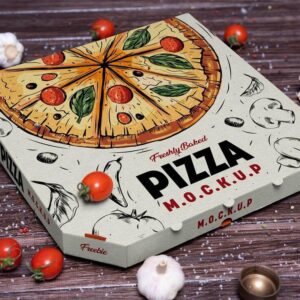
Get a Custom Corrugated Box Quote from LansBox
How Does LansBox Support SMBs with Bulk Ordering and Customization?
LansBox focuses on custom packaging for e‑commerce and D2C SMBs, with a Pizza Box category and Custom Printed Boxes options. Our process starts with consultation to define size, flute and coating choices, followed by proofing and prototyping to confirm fit and print. We coordinate production schedules and logistics so lead times and bulk discounts are easier to manage. This workflow helps brands move from prototype to scaled production while keeping print quality and product protection consistent.
- Lower per‑unit costs: Higher volume spreads setup and tooling costs.
- Consistency and quality control: Fewer variations between shipments.
- Customization at scale: Full‑color branding with repeatable material specs.
Weigh these wholesale benefits against your storage capacity and minimum order commitments to pick the best procurement strategy.
What Are the Cost‑Effectiveness and Advantages of Wholesale Corrugated Pizza Boxes?
Economies of scale typically drive down material, printing setup, and freight costs per unit as order size increases, but MOQs and lead times require inventory planning. Major cost drivers are board grade, print complexity, coating selection, and shipping. Model per‑unit costs across order sizes to find the breakeven point where packaging investment delivers branding ROI. Indirect benefits—better brand perception, fewer damaged orders, and fewer support cases—can increase customer lifetime value and justify higher upfront spend. A common approach for SMBs is to run small digital short runs for testing, then transition proven SKUs to larger wholesale runs.
How to Choose the Right Corrugated Pizza Box for Your Business Needs?
Pick the right box by matching pizza diameter, delivery time, stacking needs, brand priorities, and sustainability goals to material and print choices. Start with a list of pizza sizes and typical delivery windows, then select a flute and board grade that balance insulation and print quality. Choose coatings that give the grease resistance you need while fitting local end‑of‑life options, and pick a printing method that matches your MOQ and fidelity needs. The sections below give a technical checklist and explain how customization impacts procurement.
What Factors Should Be Considered: Size, Flute Type, and Material Quality?
Key technical factors are accurate internal dimensions to prevent sliding, flute thickness matched to insulation and stacking expectations, and board grade expressed with recognized metrics like ECT or BCT for compression performance. Ask suppliers for samples and test values that reflect your stacking and transport scenarios, and confirm food‑safety certifications for coatings and inks used in direct food contact. For common pizza sizes, E‑flute works well for small/medium pizzas where print quality matters, while B‑flute or a higher board grade suits large pizzas or longer deliveries that need more cushioning.
How Do Customization and Branding Options Influence Your Pizza Box Choice?
Customization affects cost and lead time: single‑color printing and recyclable grease barriers keep costs low, while full‑color litho‑laminate and specialty coatings create a premium unboxing experience but raise setup costs. Define a branding tier before choosing a supplier—minimal viable branding might be a one‑color logo plus a recyclable grease barrier; premium tiers use high‑fidelity visuals and specialty finishes. Digital short runs are a smart way to A/B test branding tiers before committing to larger wholesale quantities, helping you make data‑driven decisions that balance perceived value and spend.
In short: define product dimensions and delivery constraints, select flute and board grade for performance, choose coatings for food safety and recyclability, and pick a printing method that fits your budget and MOQ.
Are Pizza Boxes Corrugated Cardboard | FAQs
1. What are the different types of coatings available for corrugated pizza boxes?
Common coatings include clay‑based barriers and water‑based grease‑resistant treatments, both of which usually remain compatible with paper recycling. Some companies offer industrially compostable linings like certain PLA formulations, but those require industrial composting and may not be recyclable with paper. Choose coatings that match local recycling and composting infrastructure while meeting food‑safety needs.
2. How can businesses ensure their pizza boxes are eco‑friendly?
To make boxes more eco‑friendly, use recyclable corrugated board and avoid polymeric coatings that block recycling. Prefer water‑based or clay‑based coatings where possible, and include simple disposal instructions on the box so customers know what to recycle or compost. Working with suppliers who disclose materials and support sustainable options helps you align packaging choices with your brand values.
3. What are the advantages of using F‑flute in pizza box design?
F‑flute offers fine printability and good structural performance in a thinner profile, giving crisp graphics and decent stacking strength with lower weight. It’s a good option when you want higher‑quality visuals without moving to a heavier board, and it’s gaining attention as an alternative for brands prioritizing appearance and function.
4. How do I determine the right flute type for my pizza delivery needs?
Choose based on pizza size, delivery distance, and insulation needs. E‑flute is ideal for small to medium pizzas and short deliveries when print detail matters. B‑flute gives more cushioning and insulation for larger pizzas and longer routes. Match your choice to the delivery conditions you face.
5. What role does box design play in customer experience?
Box design shapes the customer’s first impression: clear branding, simple handling or reheating notes, and a social call‑to‑action can increase satisfaction and sharing. A well‑designed box protects the pizza and elevates perceived value—helping you stand out in a crowded market.
6. What are the key considerations for bulk ordering pizza boxes?
Plan for minimum order quantities (MOQs), lead times, and storage space. Evaluate customization options—size, flute type, print methods—and understand the supplier’s proofing and prototyping workflow. Proper planning avoids delays and helps you capture bulk discounts efficiently.
7. How can I test different packaging designs before committing to a bulk order?
Use small digital print runs to test graphics, colors, and materials without a large commitment. Run A/B tests with different designs, collect customer feedback, and analyze performance before scaling up to wholesale orders. This approach reduces risk and ensures the final design resonates with your audience.
Conclusion
Custom corrugated pizza boxes give you insulation, protection, and a practical branding canvas. By understanding flute types, board grades, coatings, and printing methods, you can choose packaging that fits your delivery model, sustainability goals, and visual identity. Explore our customization options and start prototyping—then scale the solution that works best for your business.
 EN
EN DE
DE FR
FR PL
PL PT
PT ES
ES JA
JA RU
RU AR
AR IT
IT NL
NL TR
TR KO
KO